
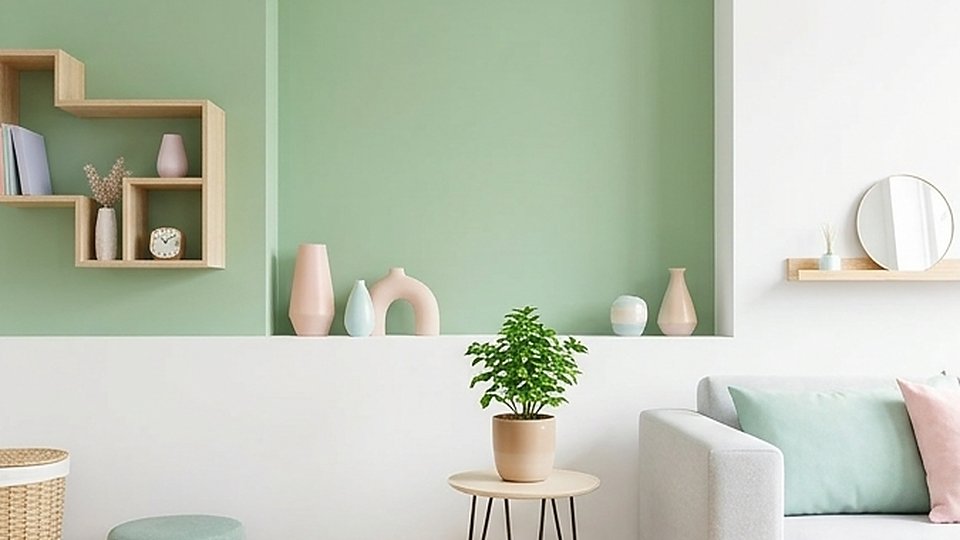
Why Identical Paint Colors Look Completely Different Across Rooms
Every architectural paint color carries two hidden optical properties: its Light Reflectance Value (LRV) on a scale from 0 (absolute black) to 100 (pure laboratory white), and its underlying spectral bias—warm yellow/red/ochre vs. cool blue/violet/green undertones. When a homeowner picks a popular neutral off a tiny backlit store rack under 4100K fluorescent aisle tubes, taking that gallon home into a north-facing living room or a maple-floored dining room shifts its appearance dramatically.
Matching Undertones to Compass Window Orientation
- North-Facing Rooms: Receive cool, diffused sky light all day with zero direct sunbeams. Cool grays quickly turn icy or slate-blue here; compensate with warm alabaster, creamy greige, or muted mushroom tones (LRV 60–78) to restore warmth.
- South-Facing Rooms: Bathed in warm golden light from late morning through afternoon. Highly saturated yellows look overpowering; balanced warm whites, soft olive-sages, and warm limestone neutrals stay crisp all day.
- East- vs. West-Facing Rooms: East rooms glow bright and slightly cool before noon then fall into soft shadow by dinner, while West rooms look muted all morning before erupting in fiery amber light at sunset. Test samples at both 9:00 AM and 5:30 PM.
The Designer Two-Step Sheen Pairing Rule
Builder-grade interiors often spray flat chalky paint across ceilings, walls, and closets alike—or worse, roll shiny satin across wavy living room drywall where floor-to-ceiling windows reveal every vertical stud crown and tape seam. High-end residential studios separate planes cleanly:
- Ceilings (Ultra-Flat 0–2% gloss): Diffuses upward window bounce so ceiling planes recede calmly overhead.
- Main Living & Bedroom Walls (Washable Matte 4–7% or Low-Luster Eggshell 10%): Ceramic-microsphere matte formulas scrub clean with mild soap without burnishing into shiny patches, while hiding minor drywall texture.
- Baseboards, Casings & Interior Doors (Satin / Pearl 25%): Just enough sheen contrast to catch architectural shadow lines and resist vacuum bumper scuffs without looking plastic like high-gloss enamel.