9-Inch Woven Microfiber Roller & Heavy-Duty Tray Kit
Eliminates lint shedding and orange-peel stipple on modern matte and eggshell walls.
Spec Highlight: 3/8-inch nap microfiber + rigid liner system
Check Price on Amazon →
Enter your room dimensions in feet to compute net paintable wall area, exact gallon rounding (+10% touch-up reserve), primer volume, and satin trim quarts.
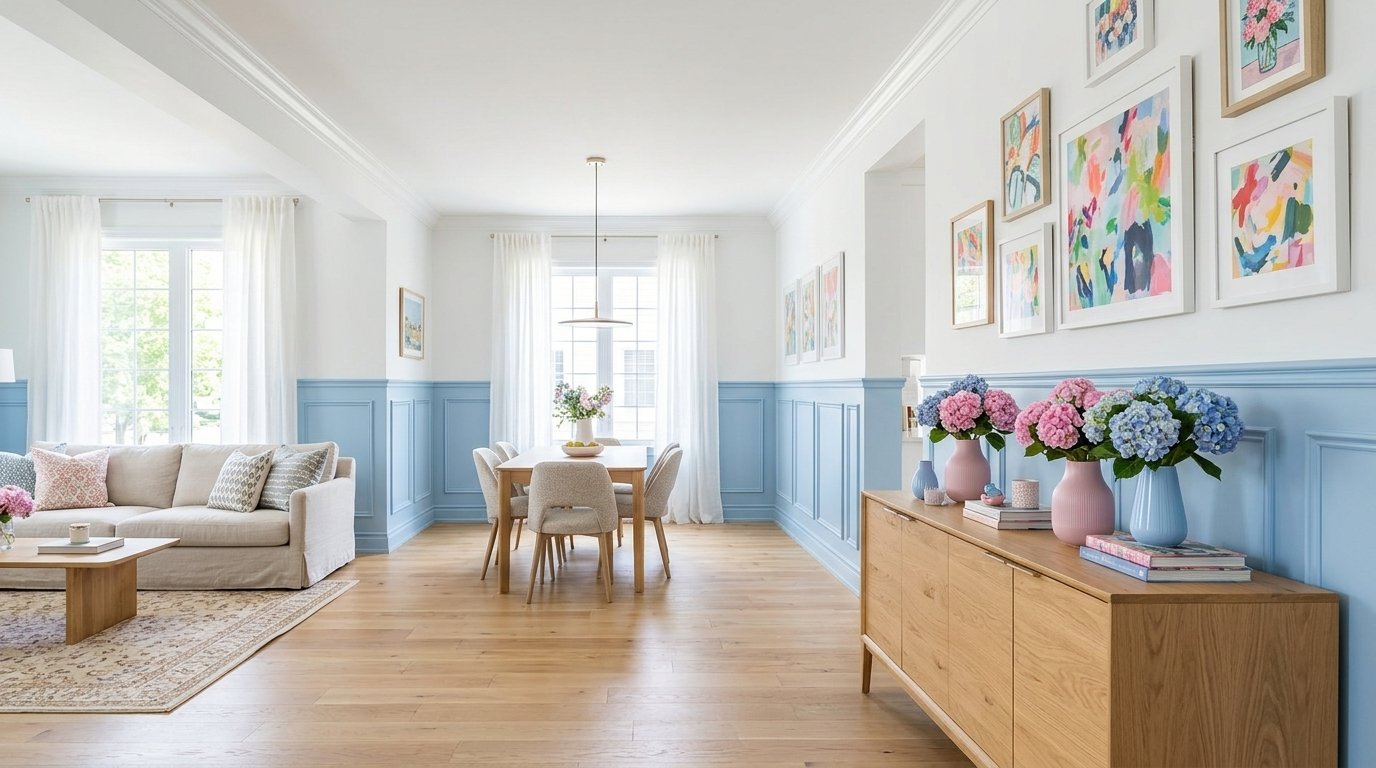 Powder-Blue Satin Millwork + Matte Gallery Walls
Independently selected tools and materials engineered for clean edges, bright finishes, and zero-mess weekend installation.
Eliminates lint shedding and orange-peel stipple on modern matte and eggshell walls.
Micro-barrier gel seals baseboard and window casing seams so zero paint bleeds underneath.
Captures exact room length, width, and vaulted ceiling heights solo in under ten seconds.

Nearly every gallon can on a hardware store shelf prints an optimistic coverage range of 350 to 400 square feet per gallon. In real North American homes, achieving 400 square feet assumes factory-sealed non-porous walls, controlled 50% relative humidity, and an experienced sprayer or microfiber roller technique that never over-stretches wet edges. When homeowners calculate bare wall area without accounting for texture porosity, roller nap retention, and second-coat build, running short by a single quart on Sunday evening creates a visible sheen transition—commonly called flashing—where the dried wall meets fresh paint bought from a second batch.
Sheen is not merely aesthetic; binder-to-pigment ratios determine washability, moisture resistance, and how severely grazing daylight highlights drywall tape joints. Modern editorial interiors favor flatter, velvety wall planes contrasted against crisp satin architectural millwork.
| Sheen Level | Reflectance | Ideal Residential Zone | Surface Prep Requirement |
|---|---|---|---|
| Ultra-Flat / Ceiling Matte | 0% – 3% | Ceilings & low-traffic formal ceilings | Hides tape crowns and minor drywall waves |
| Washable Matte | 4% – 8% | Living rooms, bedrooms, open hallways | Forgiving under floor-to-ceiling window glare |
| Eggshell | 10% – 15% | Dining rooms, kids' rooms, entryways | Standard sand & prime over patched holes |
| Satin / Pearl | 20% – 30% | Kitchens, powder rooms, baseboards, doors | Requires thorough sanding between coats |
| Semi-Gloss | 35% – 50% | High-moisture utility trim & cabinetry | Reveals dents; prime bare wood thoroughly |
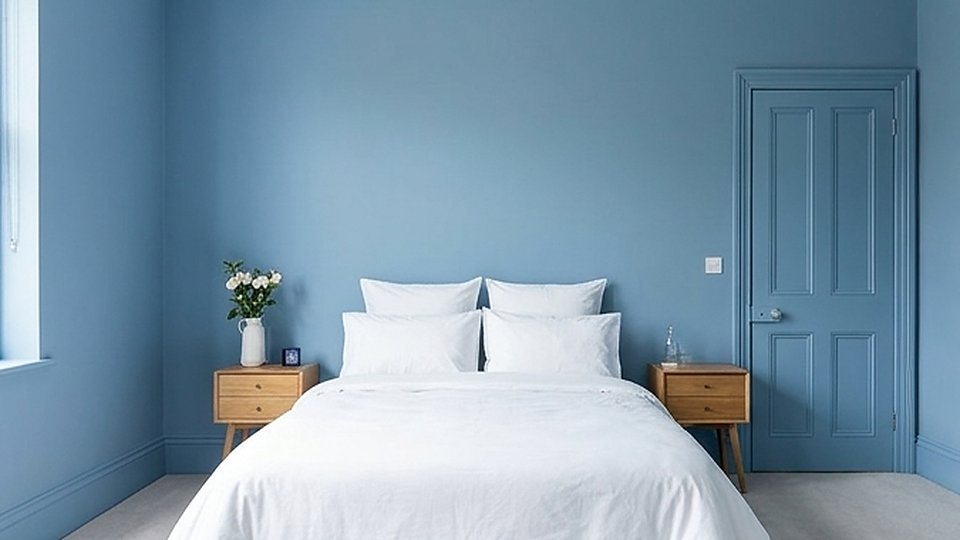
Explore more color ideas in our companion guides on Architectural Paint Sheens & Undertones and Color-Drenching Baseboards and Doors.